
Investing in the professional training of young students to give them the chance to acquire additional skills so they can enter the world of work while enhancing their talent: this is the goal set by STUDIO TRE, which funds a grant every year for new graduates from the DIT – Department of Interpretation and Translation at the University of Bologna.
We would like to start 2022 by introducing you to the winners of the two grants awarded for the 2021 competition: Ettore Galletti (future translator) and Lucia Ioli (future interpreter).
Ettore Galletti: theatre, translation and computational linguistics
From Ca’ Foscari University in Venice to the DIT in Forlì, on a journey starting from a love of foreign languages and landing in the world of translation and computational linguistics, Ettore Galletti reached his goal of graduating with a Master’s Degree in specialized translation and won the grant for his thesis on theatrical translation.
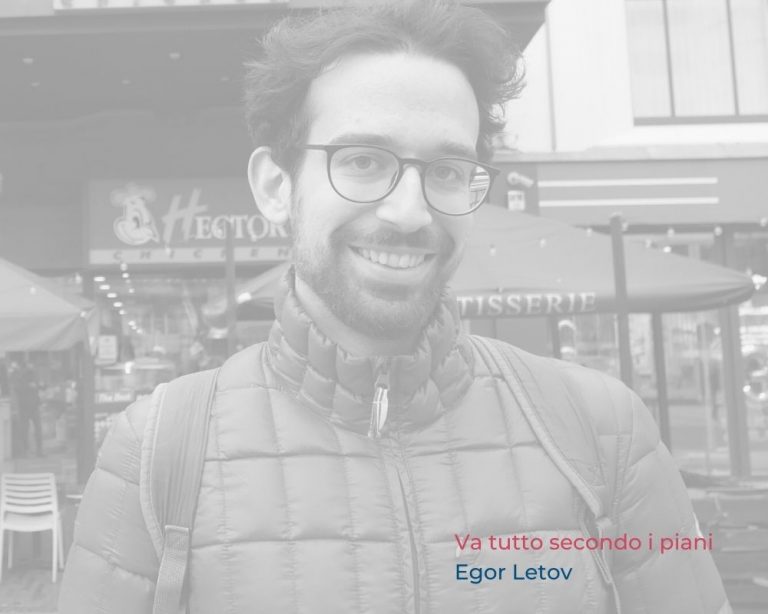
Ettore, why did you choose the specialized translation degree course?
After my bachelor’s degree in foreign literature and languages, I wanted to choose a Master’s Degree with a more targeted focus on the world of work and which would allow me to study the “scientific” side of translation, alongside its purely humanistic nature: in fact, language learning, translation, technology applied to translation and computational linguistic analysis are the subjects that I have always loved and was able to study in detail all throughout my education.
What is the subject of your degree thesis?
The subject of my thesis is the translation of an Irish play written by the playwrights and directors, Iseult Golden and David Horan. The translation is part of a collaboration project between the DIT and the Teatro delle Forchette theatre company.
After a theoretical framework of the theatrical translation and a commentary on the translation choices made, through the computational linguistic analysis of the text I identified a series of stylistic features – both in the source language and the target language – that identify various characters.
What’s your secret ambition and how will the grant help you to make it come true?
I am not sure whether I can call it a secret ambition, but I will use part of the grant to give my parents a gift, who have always supported me throughout my studies, and another part to buy a better PC so I can use CAT tools and all the translation software.
Lucia Ioli: interpreting for women victims of violence
Lucia Ioli graduated in interpretation and won the grant with a thesis on interpretation as a way of supporting women victims of violence.
This thesis was guided by her personal interest in the subject of violence against women and by her desire to “tell a story of healing and rebirth, made possible by the work of professionals who welcome and support survivors”.
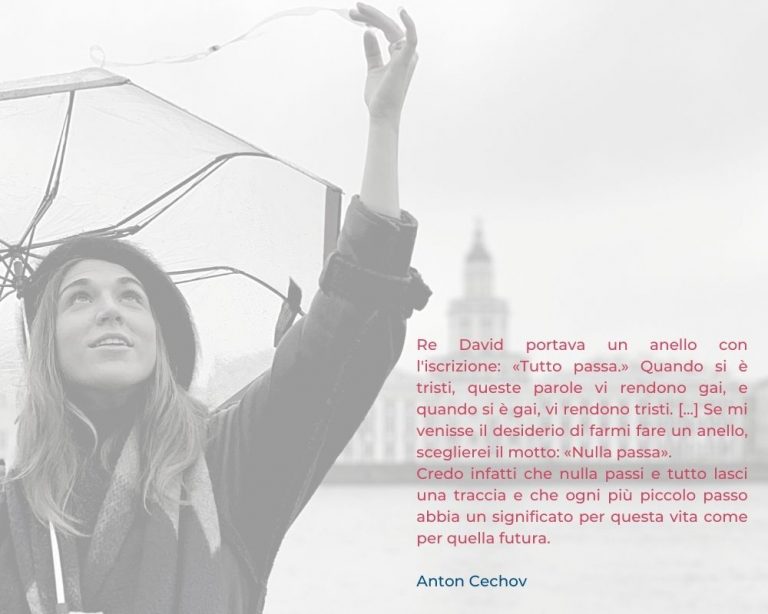
Lucia, why did you choose a degree course in interpreting?
I chose the degree course in interpreting because it combined my passion for foreign languages and my desire to provide a useful service for the community: in fact, for me, being an interpreter means becoming a means of communication in flesh and blood.
Furthermore, the chance to travel, meet plenty of people and convey words and thoughts in different languages and cultures is endlessly stimulating and enriching for me, both professionally and personally.
What is the subject of your degree thesis?
The subject of my thesis is linguistic-cultural mediation in healthcare, psychological and social areas for foreign women victims of violence.
Mediators play a very important role in these areas and being able to observe their work up close, thanks to the cooperation with the Romagna local health authority and the Dialogos Cooperative, allowed me to analyse and establish how these professionals fits in the support network, which position they take towards victims of violence and how they are perceived by other workers.
With my thesis, I not only wanted to make a theoretical contribution but, above all, a practical one in making the mediation service more effective within anti-violence networks, with a special focus on the collaborative relationship between mediators and workers, because both parties contribute, albeit differently, to the successful process of freeing foreign female victims from violence.
What’s your secret ambition and how will the grant help you to make it come true?
My secret ambition is to become a freelance interpreter and the grant, for all intents and purposes, will be part of my starting capital to cover all the costs that I will have to pay along the way.